
A wallet can show you a transaction before you sign it and still fail to tell you whether the trade is wise. That distinction matters more than a small gas estimate. In a common DeFi scenario, a US user finds a token swap through a search result, installs a browser wallet in a hurry, and approves a transaction that looks routine. The costly mistake may not be the network fee; it may be trusting the wrong download page or granting a contract broader access than the trade requires. Rabby is designed for Ethereum and EVM-compatible networks, but a wallet interface is not a security guarantee. The useful question is not simply how to install it, but how to make each step—from extension source to transaction signature—part of one risk-control process.
Rabby’s project description presents it as a wallet for Ethereum and EVM chains. That breadth can make switching networks and interacting with DeFi more convenient, but it also puts more responsibility on the user: the same browser extension may sit between you and many different applications, contracts, and assets. A careful setup reduces avoidable risk; it cannot make a malicious site, compromised device, or flawed smart contract safe.
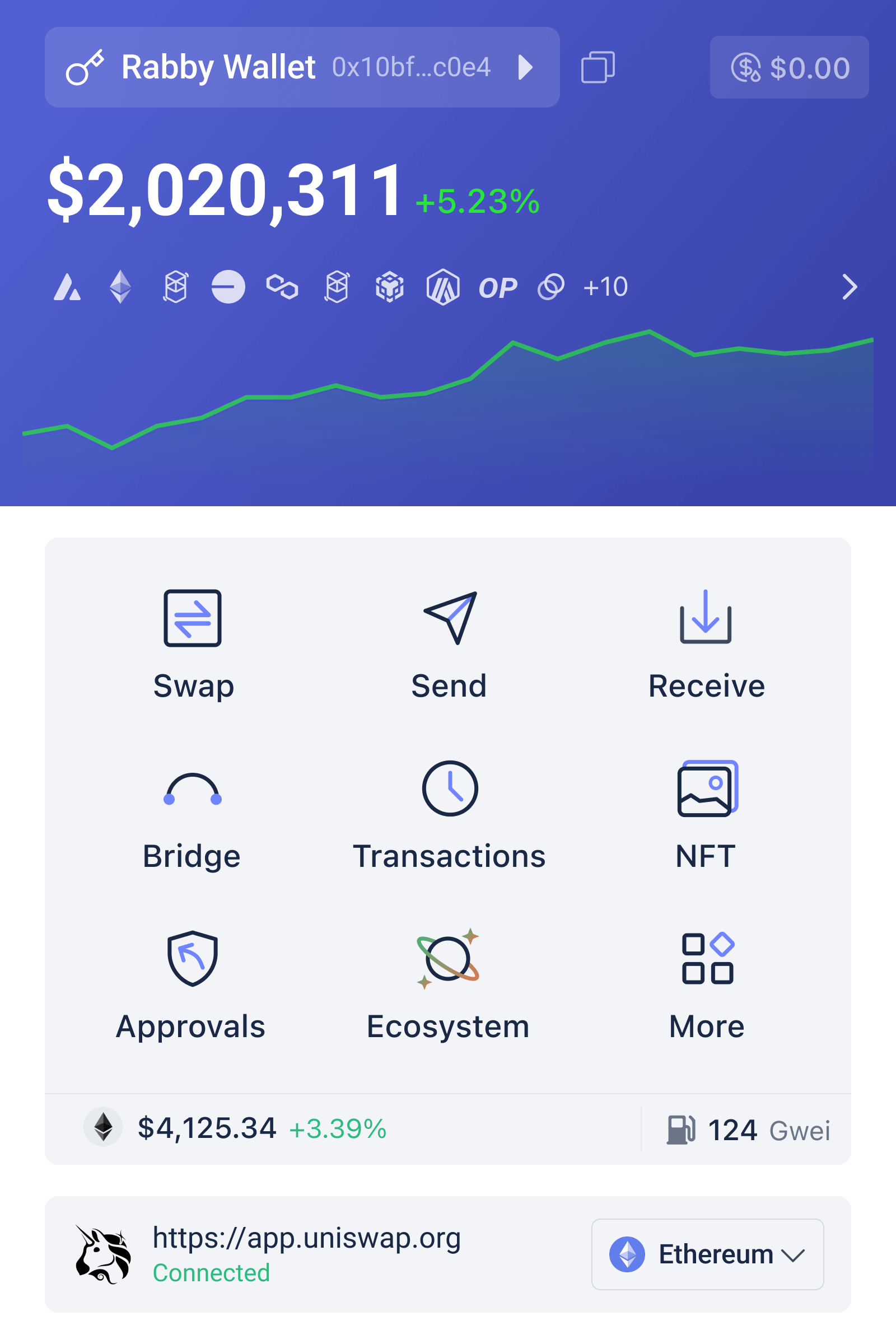
Start with the download, not the gas fee
Browser wallets are software that can request access to a site and ask you to sign messages or transactions. Because a wallet’s signing authority is valuable, the installation source is part of the security boundary. A convincing imitation may use familiar branding while distributing a malicious extension. Search results, social posts, and unsolicited messages should not be treated as proof that a download is genuine.
To begin, use a route you can independently verify as belonging to the wallet project or a trusted browser extension store listing. Check the publisher and extension identity, and be wary of pages that ask you to reveal a recovery phrase to “activate” the wallet. A recovery phrase is not a setup code to share with support staff; it can give someone control of the wallet. If you need an entry point to review before installing, this rabby wallet download page may be useful, but verify the destination and publisher independently rather than assuming any page is official.
After installation, create a new wallet or import an existing one only if you understand the custody implications. A self-custody wallet gives the user control over signing, but also places recovery and device security on the user. Store the recovery phrase offline in a secure location. Do not paste it into a website, send it through email or chat, or keep an unprotected screenshot on a cloud-synced device. A strong device passcode and current browser and operating-system updates help reduce exposure, but neither protects against every form of malware or deception.
What a transaction preview can—and cannot—do
Before a transaction is signed, a wallet may display details intended to help a user understand what the site is requesting. Treat this as a review opportunity, not an automatic safety certificate. The basic question is: “What will this transaction cause my wallet to authorize or transfer?” For a swap, check the asset, amount, destination or interacting contract, and expected outcome where shown. For a token approval, ask whether the permission is limited to the amount and purpose you intend.
This distinction catches a common misconception: approving a token is not always the same as making a one-time payment. An approval can authorize a smart contract to move a token from your wallet, sometimes beyond the amount needed for a single interaction. The exact effect depends on the contract and the approval method. If a site requests an unexpectedly large allowance, pause and investigate; convenience is not a reason to approve more than necessary. Revoking or reducing an allowance later may itself require an on-chain transaction and gas.
Wallet previews also have limits. They depend on information available to the wallet and may not explain every contract behavior, especially in complex, changing, or malicious transactions. A familiar token symbol is not proof that the asset is authentic, and a successful simulation or readable summary cannot establish that a protocol is economically sound. When the action is consequential, confirm details through the application’s independently verified interface and consider using a separate wallet with limited funds for unfamiliar protocols.
Gas optimization is a risk decision, not just a fee hunt
Gas is the computational fee required to process activity on an EVM network. The final cost depends on network conditions and the transaction’s computational needs; the displayed estimate is not a promise that the transaction will succeed at that price. A transaction with a fee set too low may remain pending or fail under changing conditions. A transaction set too aggressively may confirm sooner, but that speed may have little value if the user has not checked what they are signing.
There is also a difference between reducing the network fee and improving the economics of a transaction. A cheap swap can still be a poor trade if slippage—the gap between the expected and executed price—is high, liquidity is thin, or the contract is risky. Conversely, paying a higher fee can be rational when a time-sensitive position is exposed to market movement, though the benefit depends on the situation. Gas optimization should therefore begin with the question, “Is this action worth doing now?” rather than “How do I make the fee number smaller?”
For routine activity, compare the fee estimate with the transaction’s expected value and urgency. Avoid repeated retries without checking whether an earlier transaction is still pending; nonce and replacement behavior can complicate the picture. If you adjust fees manually, understand that the settings influence confirmation incentives, not the safety or correctness of the contract call. Waiting for a quieter period can reduce costs in some conditions, but it is not a reliable strategy when the transaction is time-sensitive or network demand changes quickly.
A practical pre-signing routine
A reusable routine is more effective than relying on a wallet’s branding or a single warning. First, confirm the extension source and the site you connected to. Second, identify the action: transfer, swap, contract interaction, or token approval. Third, inspect the amount, network, destination, and permissions; stop if the request differs from what you intended. Fourth, consider total transaction economics, including gas, slippage, and the cost of failure. Finally, sign only if the action still makes sense when you separate the wallet’s interface from the application’s claims.
This process is deliberately cautious, but it need not make ordinary use impractical. For a new protocol, a small test transaction can reveal whether the network, token, and workflow behave as expected, although it cannot prove future interactions are safe. Keeping a hot wallet’s balance limited and separating experimental activity from long-term holdings can also contain losses if a connection or approval goes wrong. These measures reduce the amount at risk; they do not eliminate smart-contract, phishing, or device threats.
For US users, the practical context is a crowded market of browser extensions, DeFi interfaces, and rapidly changing network conditions. The project’s September 5, 2026 description emphasizes Ethereum and EVM-chain use; that scope signals compatibility as a central part of the product’s positioning, not a guarantee that every chain or application interaction is equally safe. Before relying on any feature, check what the current extension actually supports and whether the application is operating on the network you intend to use.
FAQ
Does downloading Rabby make a DeFi transaction safe?
No. A wallet can help present transaction information and manage signing, but it cannot guarantee that a website, token, smart contract, or device is trustworthy. Verify the extension and application, inspect permissions, and avoid signing requests you do not understand.
Can I reduce gas by setting a lower fee?
Sometimes a lower fee may reduce what you pay, but it can also delay confirmation or cause a transaction to fail, depending on network conditions. Compare the potential savings with the transaction’s urgency and the cost of being stuck or having to retry.
Should I approve unlimited token spending to save time?
That is a convenience-versus-exposure trade-off. A broad approval may avoid future approval steps, but it can give a contract more authority over your tokens than a single transaction needs. Review the requested allowance and grant only what you are comfortable authorizing.
The most useful way to think about a browser wallet is as a signing control point—not a substitute for judgment. Download verification protects the first step; transaction review protects the next; gas discipline helps ensure a fee decision does not distract from the action itself. Better security comes from keeping those checks connected.